Pet Loss & Remembrance: Coping With Grief
Losing a pet can leave a hole in your home and your heart. This is a gentle guide to grieving the loss of a pet, helping your family through it, and finding ways to remember them.
Written by Dr Jenny Kurtz-Shefford, BVSc CertAVP PGCertVPS MRCVSVeterinary Surgeon, Cartref Home Pet Care · Last reviewed September 2026
Your Grief Is Real
Pet bereavement is the loss of a family member, and it deserves care and kindness.
If you are grieving the loss of a pet, please know that what you are feeling is real, and it matters. Your dog or cat was there for the ordinary moments and the hard ones. They knew your routines, your moods and the sound of your key in the door. Losing them is losing a companion and a member of the family.
Sometimes people around us don't quite understand. You might hear “it was only a dog” or be expected to carry on as normal the next day. That can make pet bereavement feel lonely. It is not “only” anything. The depth of your sadness reflects the depth of the bond you shared.
At Cartref, we sit with families at one of the hardest moments of their lives, and we see every day how much pets are loved. We have written this page, with Dr Jenny, to offer some gentle thoughts on how to cope with losing a dog or cat, how to support children and other pets, and ways to keep their memory close. Take from it whatever helps, and leave the rest.
What Grief Can Feel Like
Grief rarely follows a straight line. You may feel many of these, a few, or something else entirely.
Sadness
A deep, aching sadness that can catch you off guard: reaching for the lead, listening for paws on the stairs, or setting down a bowl that no longer needs filling.
Guilt
Going over the last weeks again and again, wondering if you should have noticed sooner or chosen differently. Guilt is very common, and it usually grows out of love.
Anger
Anger at the illness, at the unfairness of it, at yourself, or even at people who don't seem to understand. It is a natural part of grief and does not make you a bad person.
Numbness
Some people feel very little at first and worry that means they didn't care enough. Numbness is often the mind's way of protecting you until you are ready to feel more.
Relief
If your pet was poorly for a long time, it is normal to feel relief that their suffering, and the worry of caring for them, has ended. Relief and grief can sit side by side.
Loneliness
A pet shapes the rhythm of every day. Without walks, mealtimes and a warm body on the sofa, the house can feel very quiet, especially if you live alone.
There is no “right” way to grieve and no timetable to keep to. Some days will feel almost normal, and then a smell, a sound or an empty spot in the garden will bring it all back. That is not going backwards. It is simply how grief moves.
Be as kind to yourself as you were to them. Rest when you can, eat something, get outside, and let people help.
Guilt After Euthanasia
If you are asking yourself whether you did the right thing, you are not alone.
Of all the feelings that follow a goodbye, guilt is often the heaviest. “Was it too soon?” “Did I leave it too late?” “What if the new medication had worked?” These “what if” thoughts are completely normal, and almost everyone who has made this decision has wrestled with them.
It may help to remember that you made the decision with the information you had at the time, out of love, and with your pet's comfort at heart. Choosing a peaceful goodbye, before pain or distress took over their days, is one of the kindest and bravest things a person can do for an animal who depends on them.
Hindsight can make everything look clearer than it really was. When guilt arrives, try gently asking yourself: would I judge a friend this harshly for the same choice? Most of us would tell that friend they gave their pet a gentle end to a well-loved life.
If it would help to talk through your pet's last days, or questions are still going round in your head, you are welcome to call us on 07472 574773. If you are still weighing up the decision for a pet now, our guides for dogs and cats may help.
Helping Children Through Pet Loss
For many children, losing a pet is their first experience of death. Honesty and gentleness go a long way.
Children often sense far more than we expect, and they cope best when they are included rather than protected from the truth. You know your child best, so adapt these suggestions to their age and nature.
Use honest, simple words
Say that your pet has died and that their body stopped working, so they can't feel pain any more. Many experts advise avoiding phrases like “put to sleep” or “went away” with young children, as these can cause confusion, or fears about going to sleep or people leaving.
Let them ask questions
Answer as truthfully as you can, at their level. Children may ask the same question many times, sometimes weeks later. That is part of how they make sense of it.
Include them in saying goodbye
If it feels right for your family, older children may want to be present, or to say goodbye beforehand. Younger children can draw a picture, choose a toy to go with their pet, or help plant something in the garden.
Share your own feelings
It is fine for children to see you sad. It shows them that grief is a normal response to losing someone we love, and that it is safe to talk about.
Keep remembering together
Look at photos, tell funny stories, or make a memory box as a family. Keeping your pet part of family conversation helps children feel their love still matters.
When Other Pets Grieve
Animals who shared a home often notice when a companion is missing.
After a loss, you may notice your other dog or cat seems unsettled. They might search the house or garden, wait by the door, sleep in their companion's bed, call out more than usual, or go off their food for a little while. Others seem to carry on much as before. Every animal is different.
Some families find it helps to let other pets see and sniff their companion's body after they have passed. It is entirely your choice, and with a home visit it is easy to do: other pets are always welcome to be there.
- Keep mealtimes, walks and bedtime as steady as you can, as routine is reassuring.
- Offer a little extra time, play and gentle company, without forcing attention on them.
- Leave their companion's bed or blanket out for a while if it seems to comfort them.
- If they stop eating for more than a day or two, or seem unwell, speak to your own vet.
Ways to Remember Your Pet
Pet memorial ideas that families have found meaningful. There is no right or wrong way to remember.
Keep Their Fur Clipping Close
Every visit we make includes a fur clipping keepsake. Some families place it in a locket, a small glass frame or a keepsake box so a soft piece of their pet is always near.
Make a Memory Box
Gather their collar, name tag, a favourite toy, the fur clipping, photographs and cards from friends. Having everything in one place can be a comfort to return to.
Create a Photo Book
Go back through your phone and old albums to put together a book of their life, from puppy or kitten days to their favourite snoozing spots. Children often love helping with this.
Plant a Tree or Rosebush
A tree, rosebush or patch of flowers where their ashes are scattered or buried gives you a living place to visit, and something that grows and blooms year after year.
Commission a Portrait or Paw Print
A painting, drawing or paw-print piece from a local artist can capture their character in a way that feels personal and lasting, whether it hangs on the wall or sits on a shelf.
Write Them a Letter
Writing down what you would like to say, the things you are grateful for, or even the things you wish had gone differently can help to put gentle words to a heavy heart.
Donate in Their Name
A donation to an animal rescue or charity in your pet's name can turn some of your love for them into help for other animals who need a home or care.
Light a Candle on Their Anniversary
Marking their birthday or the anniversary of their passing, with a candle, a walk along their favourite route or an evening of stories, keeps their memory part of family life.
Many families choose to bring their pet's ashes home and keep them somewhere special, or scatter them in a favourite spot. Through Bluebell Wood Pet Crematorium, we arrange individual private cremation, with ashes returned in an included vessel. You can read more on our pet cremation page, or in our guide to what to do when a pet dies at home, which covers garden burial too.

The Rainbow Bridge
Why so many families take comfort in the idea of their pet crossing the Rainbow Bridge.
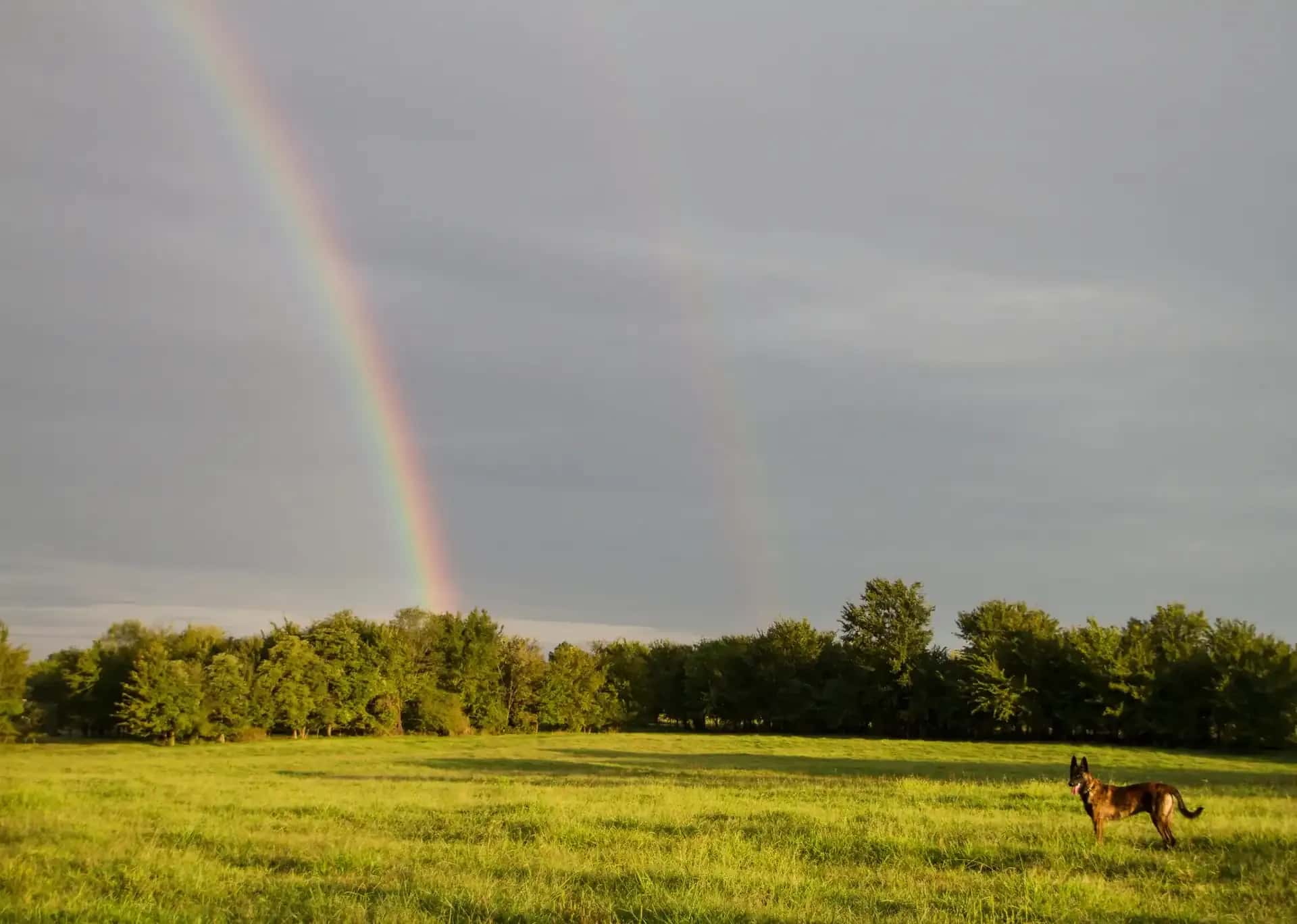
If you have lost a pet, someone may have told you they have “crossed the Rainbow Bridge”. The phrase comes from a much-loved prose poem, widely shared since the 1980s, whose author is uncertain. It describes pets who have died waiting in a peaceful, sunlit meadow, healthy and whole again, until the day they are reunited with the people who loved them.
Whatever your beliefs, it is easy to see why the Rainbow Bridge poem means so much to so many. It offers a picture of your pet free from pain, it honours how strong the bond was, and it gives grief somewhere hopeful to rest. Many families use the words in sympathy cards, on memorial plaques, or simply to explain loss to a child.
If it brings you comfort, hold on to it. And if it doesn't fit how you see things, that is fine too. What matters is finding a way to think about your pet that brings a little peace.
Every quiet morning, every muddy walk, every evening curled up close: none of it is lost. It became part of you, and it goes wherever you go.
Where to Find Support
You don't have to carry this on your own. Pet bereavement support is out there, and it's free.
Blue Cross Pet Bereavement Support
A free and confidential service run by trained volunteers who understand how painful losing a pet can be. You can reach them by phone, email or webchat.
Visit the Blue Cross pet bereavement serviceSamaritans
If you are finding it hard to cope, or having thoughts of harming yourself, Samaritans are there for you, free, 24 hours a day, 365 days a year. Call 116 123. You do not have to be in crisis to call.
Visit the Samaritans websiteYour GP
If grief feels overwhelming, is affecting your sleep, eating or work, or is not easing as time goes on, please talk to your GP. They can offer support and point you towards further help.
Friends Who Understand
Not everyone understands the loss of a pet, but many people do. Leaning on friends or family who have loved and lost an animal of their own can make you feel much less alone.
After every visit, we share follow-up bereavement support information with you, so you know where to turn in the days and weeks ahead.
We are not counsellors, but if you would simply like to talk about your pet, or ask something that has been on your mind since their passing, Dr Jenny is always happy to hear from you.
Frequently Asked Questions
We understand you may have questions. Here are some of the most common ones we receive.
More Help & Advice
Gentle, practical guidance for every stage of saying goodbye.
Is It Time? (Dogs)
Signs your dog is nearing the end of life, with a quality-of-life checklist.
Read moreIs It Time? (Cats)
Signs your cat is nearing the end of life, with a quality-of-life checklist.
Read morePet Cremation
Individual private cremation in South Wales, with your pet's ashes returned home.
Read moreWe're Here If You Need to Talk
Whether you have questions about your pet's last days or you are caring for another pet now, we're only ever a phone call away. No pressure, just a kind conversation.